

- Patient Stories
- Bi Guiping





First Single-Needle Bipolar Nanoknife Pancreatic Cancer Ablation in Western China
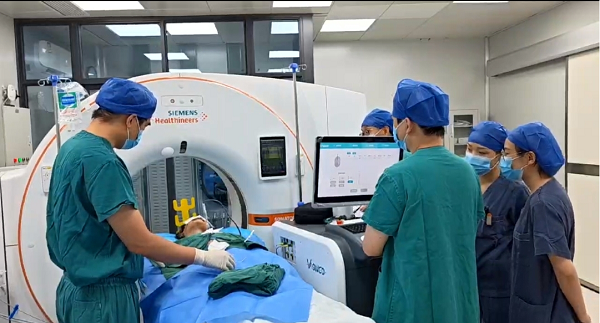
Recently, Professor Liao Zhenyin's team at the Uni-Asia Hospital Cancer Center successfully performed a Vina Knife (Nanoknife) ablation on a 63-year-old patient with Stage IV pancreatic cancer. The procedure was performed under CT guidance using a single-needle bipolar (integrated positive and negative electrode) design, with percutaneous puncture directly targeting the pancreatic lesion, completed under local anesthesia combined with sedation. This marks the first single-needle bipolar nanoknife pancreatic cancer ablation in Western China.
Case Summary: Stage IV Patient After Multiple Lines of Therapy, Traveling Thousands of Miles for Treatment
The patient is a 63-year-old female from Dalian. After being diagnosed with pancreatic cancer, she had received multiple lines of therapy, including radiotherapy and chemotherapy. Due to biliary obstruction, she underwent biliary stent placement and percutaneous transhepatic biliary drainage (PTCD) for jaundice relief. Interventional therapy was also performed for secondary malignant liver lesions. Her current clinical stage is T3NxM1 (Stage IV), with ascites. Physical examination revealed mild tenderness in the mid-upper abdomen, with no other significant positive findings. The patient and her family, having long admired Professor Liao Zhenyin's profound expertise in the field of minimally invasive tumor ablation, traveled nearly 3,000 kilometers from Dalian to Chengdu specifically for treatment.
After multiple lines of therapy, the patient still faced challenges including biliary drainage dependence and a relatively high local tumor burden, with limited room for further intensification of systemic therapy. Following a comprehensive evaluation by Professor Liao's team, a palliative local ablation strategy was decided upon, aiming to control the local lesion, reduce tumor burden, and create conditions for subsequent systemic therapy.
Surgical Procedure: A Single Needle Navigating the "Organ Minefield"
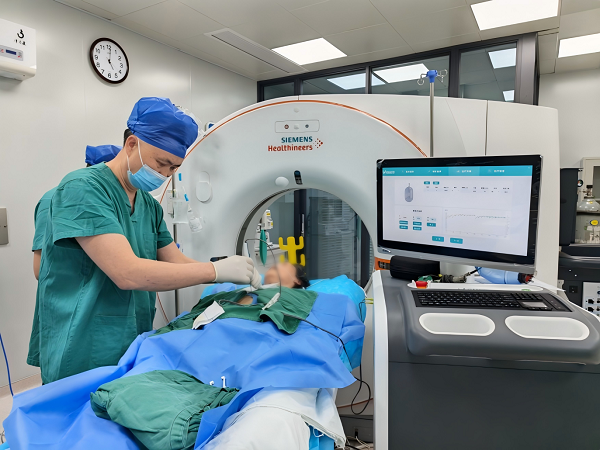
The pancreas is deeply located with an extremely complex surrounding anatomy, surrounded by critical structures including the stomach, intestines, bile duct, portal vein, and superior mesenteric vessels – making it a veritable "organ minefield" for ablation therapy. This procedure was performed under CT guidance using local anesthesia combined with sedation, without the use of muscle relaxants or endotracheal intubation throughout the entire process. Professor Liao used just a single integrated positive-negative ablation needle to precisely puncture the pancreatic lesion percutaneously. The single-needle approach simplified the puncture procedure while maximally avoiding the stomach, intestines, and major blood vessels.
Leveraging the Vina Knife's broad-spectrum synergistic technology, the patient did not experience significant muscle contractions during the procedure, was able to respond normally, and maintained stable vital signs. Upon completion of the ablation, the team simultaneously placed a drainage tube to reduce the risk of postoperative exudation. The entire surgery took less than one hour, and the patient returned to the ward safely, able to ambulate 4 hours post-procedure.
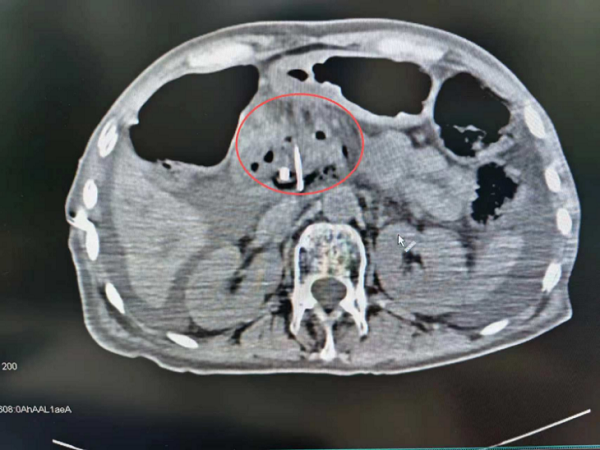
(Image: Intraoperative CT imaging showing precise needle placement)
This procedure was positioned as palliative treatment, aiming to achieve local lesion control and tumor burden reduction with minimal trauma. Through Vina Knife ablation volume reduction, it also aims to improve the tumor microenvironment and activate immune responses, buying valuable time for subsequent systemic therapy.
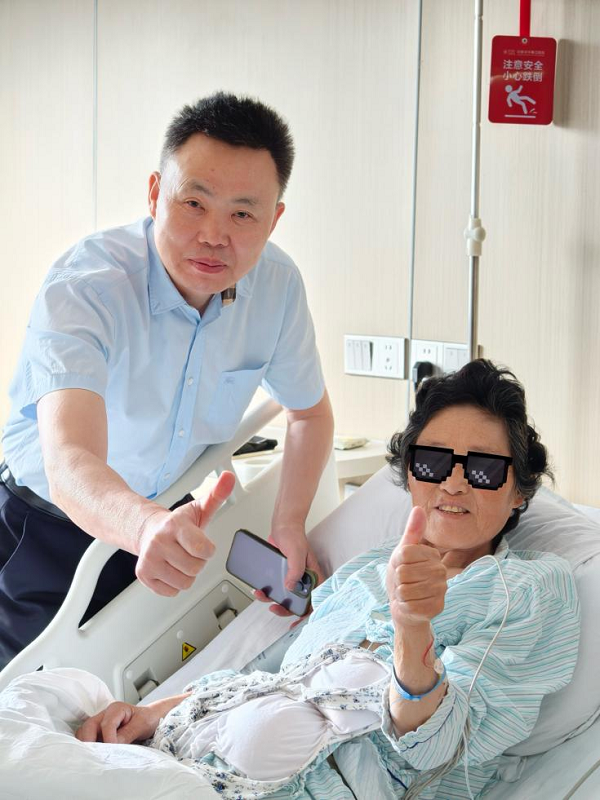
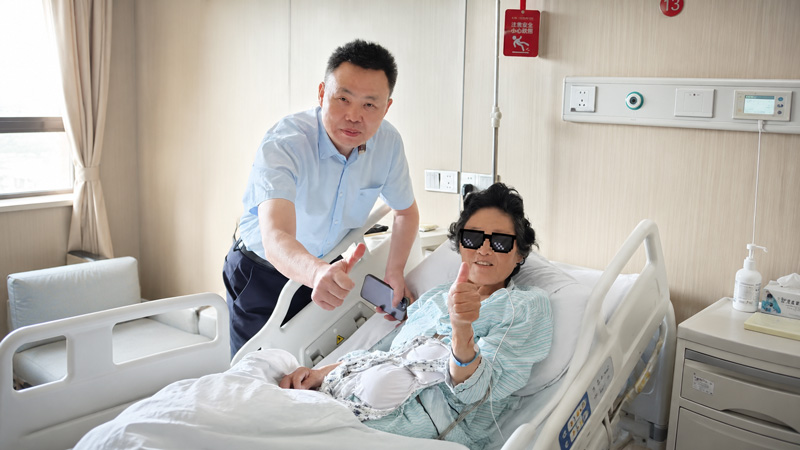
(Image: Patient ambulating 4 hours post-procedure; face obscured for privacy)
Surgeon's Commentary: Single-Needle Ablation—Simplifying Complexity, Safe and Controllable
Professor Liao Zhenyin commented, "The pancreas is surrounded by dense structures adjacent to the gastrointestinal tract and major blood vessels. Traditional nanoknife ablation often requires multiple parallel needle placements, with numerous puncture routes, high needle-placement difficulty, and consequently increased potential risks. The Vina Knife features a single-needle bipolar design—a single needle can complete the ablation, providing a clearer puncture route, significantly simplified operation, and more manageable risks. In the palliative treatment setting for advanced pancreatic cancer, this technical approach holds particular clinical value."
Clinical Challenge: The Difficulty of Pancreatic Cancer Local Treatment Lies in Its "Location"
Pancreatic cancer is known for its high malignancy and insidious onset, earning it the title "King of Cancers." According to GLOBOCAN 2022 data, China sees approximately 119,000 new cases and 106,000 deaths annually. The overall 5-year survival rate is less than 10%, with about 80% of patients having already lost the opportunity for curative surgery at the time of diagnosis, and a median survival of only 6-9 months for advanced-stage patients.
The primary challenge in local treatment for pancreatic cancer lies in its "location." The pancreas is situated deep in the retroperitoneum, with the pancreatic head enveloped by the duodenum and critical structures, including the common bile duct, portal vein, and superior mesenteric artery and vein, traversing through it. As the tumor progresses, the lesion often becomes closely adjacent to or even invades surrounding blood vessels, bile ducts, and intestines, presenting significant challenges for surgical resection and local therapy.
The value of irreversible electroporation (IRE) is thus highlighted: it uses high-voltage pulsed electric fields to create irreversible damage to cell membranes, achieving tumor cell destruction. With its non-thermal ablation and tissue selectivity, it can destroy tumor tissue while maximally preserving adjacent blood vessels, bile ducts, and intestines, significantly reducing the risk of collateral organ damage due to its special anatomical location. The "Chinese Expert Consensus on Nanoknife Therapy for Pancreatic Cancer" has established it as an important local treatment modality for unresectable pancreatic cancer.
Clinical Value: Single-Needle Bipolar—Exploring a More Minimally Invasive and Accessible Treatment Pathway
However, the application of traditional IRE in the pancreas is not without challenges – it requires parallel placement of multiple electrode needles, demanding extremely high precision in needle spacing, parallelism, and intraoperative image guidance. The pancreas is surrounded by "neighbors" on all sides, and with each additional puncture needle comes increased risk of inadvertently damaging the stomach, intestines, and major vessels, along with higher consumable costs. Coupled with the high cost of imported equipment (often exceeding 10 million RMB) and high operational barriers, this technology has long been confined to a limited number of medical centers, making it difficult to benefit more patients.
Domestic experts represented by Professor Chen Yongliang of the PLA General Hospital have long advocated that China needs its own electroporation technology – to make it available and affordable for pancreatic cancer patients.
The Vina Knife has pioneered the design of "single-needle bipolar + local anesthesia without muscle twitching" in response to this expectation – a single needle completes the ablation, reducing the number of punctures and simplifying the needle-placement process, offering a completely new technical pathway for local ablation in complex anatomical locations, minimizing surgical risks in the "organ minefield." At the same time, treatment costs are significantly reduced, making it accessible to more pancreatic cancer patients and marking a new milestone for China's irreversible electroporation ablation technology.
The successful performance of this first single-needle bipolar advanced pancreatic cancer ablation in Western China by Professor Liao Zhenyin's team represents a solid clinical practice of single-needle bipolar technology in the palliative treatment of advanced pancreatic cancer, and has accumulated valuable experience in exploring minimally invasive treatment for tumors in complex locations.